
Training is a claim. This is the record.
Every participant is asked what they thought of the course they just finished. These are their answers, in their own words, published only where the named person has confirmed consent.
Highlights

With my benchmark from Syria, Afghanistan, and Mexico, I can attest to the outstanding professionalism of the Foundation's team. The organizational aspects were completely efficient, maximizing delivery from international and local teams. I wholeheartedly recommend any collaboration with the Foundation.
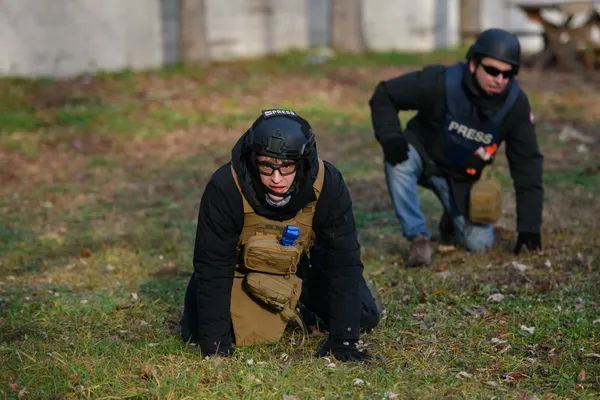

The DH Foundation has been an excellent partner. The practical training and scenarios made our team feel as prepared as possible to report safely. The medical training was the best I have ever seen. After the course, journalists could confidently apply a tourniquet and perform basic trauma care — feeling empowered and ready to report in Ukraine.

DH Foundation's courses stand out for their practical, real-life focus — from emergency first aid and evacuation drills to staying safe after shelling or drone attacks. These trainings are changing newsroom culture and practices.

This was the first training I attended with such a detailed simulation of a hostile environment — exactly what was missing from other courses. The conditions the organisers create let you immerse yourself fully and carry theory into practice, so that later the work is calmer and safer.

Very skilled team. Most credible, reality-proven content. Very impressed with every trainer.
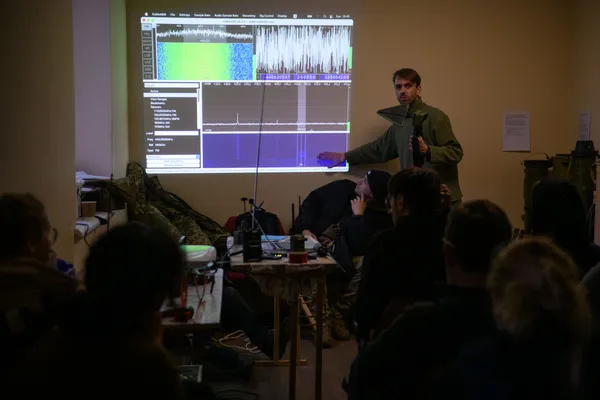

This is the first HEAT training I've attended that truly reflects the reality of working near the front lines in Ukraine. From treating shrapnel injuries to responding to drone attacks, in theory and in practice. It's not pretty, but it prepares you for what may be coming.

In the media.
Reporting on Daily Humanity and the 2402 Foundation — from first aid to the changing realities of drone warfare.

“Journalists in a drone warfare training session quickly find out how hard it is to outrun the devices.”
Opinion · training video caption
Read article
“one of the few programmes calibrated to the realities of working in Ukraine”
Training report · working in Ukraine
Read article
“Particularly new is the drone training, which teaches journalists and media support staff how to analyze risks and respond.”
Foundation-supported training
Read article
“learn to handle the most important threat in modern warfare. Drones.”
Training report · drone safety
Translated from Danish

“Ukraine’s largest organization training civilians to survive in combat zones”
Reporting · civilian safety
Read article
“After hours of exercises, continuing until nightfall, most journalists say they feel better prepared”
Training report · preparedness
Translated from French

“Her reality-check slide deserves wider circulation than a workshop audience”
Workshop report
Read article
“five HEAT (Hostile Environment Awareness Training) sessions focused on drone-related risks for nearly 100 Ukrainian journalists and international freelance reporters”
Partner report · drone-risk training
Read article
“For now, at least, it is possible to learn how to maximise one’s chances of survival.”
Reporting · drone safety
Read article
“For us, this is a chance to react in time and make decisions that will help us survive.”
Equipment support · drone detectors
Translated from Ukrainian

“We teach them to distinguish real threats from fears.”
Interview · Katerina Sergatskova
Translated from German

“a course for journalists where they learn to operate in a war zone and provide first aid”
Reporting · first aid & safety
Translated from Danish

“provides support and training to Ukrainian journalists”
Reporting · journalist support
Read article
“adapted international training standards to the realities of modern warfare”
HEFAT · programme evaluation
Translated from Ukrainian

“giving trainees a more realistic experience”
VR training · via Reuters Institute
Read article
“giving trainees a more realistic experience of the conditions under which they will have to make critical decisions”
Reporting · virtual reality training
Read articleSelected coverage 01 of 16
Every published testimonial.
If you are covering the war in Ukraine as a journalist, that is exactly the training that you need.
The training is intense, but that intensity gives you the opportunity to process a lot of information under pressure, which is key in real situations — how to analyse, decide and react to certain threats.
The training covers basic theoretical and practical knowledge and skills that can help journalists stay safe, for themselves and those around them. I believe every photojournalist who intends to work and report from Ukraine or any other hostile environment should take such training.
This is the first HEAT training I've attended that truly reflects the reality of working near the front lines in Ukraine. From treating shrapnel injuries to responding to drone attacks, in theory and in practice. It's not pretty, but it prepares you for what may be coming.
The training is top class, though it seems to need more than two days. The drone simulation was especially good — nobody else on the tactical medicine market does that — but I would want even more drills and simulations.
With my benchmark from Syria, Afghanistan, and Mexico, I can attest to the outstanding professionalism of the Foundation's team. The organizational aspects were completely efficient, maximizing delivery from international and local teams. I wholeheartedly recommend any collaboration with the Foundation.
From beginning to end the information was delivered in great detail, with practical exercises alongside it. The drill on working during a drone attack was very realistic and showed clearly how to behave in those conditions.
Calmly working through the procedures for unusual and crisis situations that could occur builds resilience to unexpected events. Calmly defining risks and responses strengthens the organisation.
Grateful for the chance not just to get the theory but to lock it in with practice. No other training I have been to focused so heavily on practical skills.
It was very interesting — my first time at an event this interactive, with people split into groups, constant tasks and an exchange of views.
The training was really good, especially the drill with the vehicle.
Great trainers and useful practical work reinforcing the theory.
Very skilled team. Most credible, reality-proven content. Very impressed with every trainer.
The training is very dense and intense, but useful. Definitely worth two full days of my life.
A good chance to understand the practical threat drones pose and how much teamwork matters in a combat zone — on position and on the road, when the threat is sudden and not expected.
Realistic simulations, with the chance to run scenarios several times even in a one-day course. The instructors gave us a lot that was new, in both the practical and the theoretical parts. Useful — I recommend it.
Relevant, up to date, professional, engaging and maximally productive. Every media worker operating in a frontline zone should take this training.
A must-have in kill-zone literacy. Feel for yourself what it is to try to outrun an FPV in body armour, then think about alternative ways of anticipating that situation — though here they have thought about it for you.
I consider this training absolutely obligatory for everyone, despite my own fear at the sight of blood. The instructors pass on knowledge in a way that lets you break through that fear and gain real life-saving skills.
Satisfied with the safety, the organisation and the subject. I gained important knowledge that will help protect confidentiality — my own and our beneficiaries' data.
20 of 117 testimonials shown